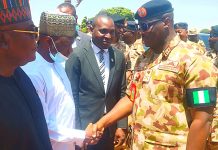
On 11th September 2024, Hon. Prof. Theodore Bala Maiyaki (SAN) was sworn in as the Member representing Quaan-Pan South Constituency in the Plateau State House of Assembly, marking the beginning of what has become a purposeful and reform-driven tenure. His emergence signaled more than a routine transition in representation; it introduced a leadership style defined by intellectual depth, legal expertise, and a deep-rooted connection to the grassroots. In just about one and a half years in office, Prof. Maiyaki has steadily translated vision into visible impact, combining legislative innovation with community-focused interventions that have left tangible marks across Quaan-Pan South and beyond.
From the outset, he approached lawmaking with clarity of purpose. As a Senior Advocate of Nigeria and seasoned academic, he brought into the Assembly a disciplined understanding of governance, institutional reform, and policy foresight. His sponsorship and co-sponsorship of twelve significant bills within his first legislative year reflect not only productivity but strategic thinking. Through measures such as the Plateau State Judiciary Service Pension Board Bill, 2025, and the Magistrates’ Conditions of Service Bill, 2024, he strengthened judicial welfare and institutional stability. His Tenancy Regulation Bill, 2025, sought to create fairness and order in landlord-tenant relations, while the Anti-Logging and Charcoal Bill, 2025, alongside the Single-Use Plastic Prohibition Bill, 2025, addressed pressing environmental concerns in a state whose ecological balance remains delicate.
Equally forward-looking were his legislative efforts on the Community Early Warning System (CEWS) Bill, 2025, aimed at proactive peacebuilding, and the Arbitration and Dispute Resolution Bill, 2025, designed to foster investment confidence. His engagement with evolving social realities was evident in the Surrogacy Regulation Bill, 2025, and the Defamation Bill, 2025, both of which seek to provide clarity and protection within changing societal contexts. As co-sponsor of the Remuneration of Appointed Traditional Rulers Bill, 2025, he reaffirmed the importance of traditional institutions in governance.
Early in his tenure, his leadership of a stakeholders’ public hearing on the Bill to Establish the Office of the Public Defender set the tone for participatory lawmaking. His motions defending the continued presence of the Industrial Training Fund headquarters in Jos and advocating for the operationalization of the Muhammadu Buhari Mother and Child Hospital demonstrated his readiness to protect regional interests while promoting public welfare.
Beyond legislative chambers, Prof. Maiyaki’s impact has been felt directly within communities. Across Quaan-Pan South, projects facilitated under his watch have addressed urgent needs in water supply, healthcare, security, and rural electrification. The rehabilitation and furnishing of the Police Station in Kwande improved security infrastructure, while the drilling of new boreholes in Kwalla Yitlaar, Kwalla Moeda, Kurgwi, Njak Shindai, and Bwall Wards restored access to potable water for many households. The rehabilitation of additional boreholes and the construction of staff quarters for health workers in Dasuwar Village strengthened essential social services. Notably, the installation of a 550KWP solar mini-grid in Kwande and Bakin-Ciyawa commissioned in February 2025 marked a significant stride toward sustainable rural electrification, expanding economic and social opportunities for residents.
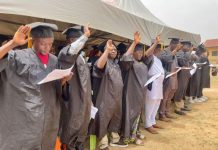
As Chairman of the House Committee on Education, Science and Technology, Prof. Maiyaki has matched oversight with practical intervention. Recognizing education as the cornerstone of development, he awarded scholarships to over 500 tertiary institution students from Quaan-Pan South in the first batch of beneficiaries, providing relief to families and preserving the academic aspirations of young people who might otherwise have been forced to withdraw.
Beyond formal programs, he has personally supported indigent students with tuition payments, textbooks, and educational materials. Through oversight visits and policy advocacy, he has consistently pressed for improved funding, better teacher welfare, and infrastructural enhancement in schools. His emphasis on science, innovation, and digital literacy underscores a long-term vision that prepares Plateau State for competitiveness in a knowledge-driven economy.
His tenure has also been characterized by compassion and inclusion. Through widows’ support initiatives benefiting 240 women and welfare packages extended to 240 elderly persons, he demonstrated that representation must address both structural reform and human vulnerability. Seasonal welfare distributions and support for cultural activities have reinforced unity and heritage preservation within the constituency. His youth-centered philosophy is evident in the composition of his legislative aides, all of whom are young people, and in the establishment of a gender-inclusive think tank that encourages broader participation in governance. Regular empowerment programs targeting women and youths further illustrate his belief that sustainable development depends on inclusive opportunity.
Central to his approach has been accessibility. Through structured platforms such as the People’s Parliament and the Constituency Parliament, he institutionalized feedback mechanisms that ensure each ward has a voice in shaping priorities. His consistent engagement with traditional rulers and stakeholders has strengthened trust, fostered dialogue, and promoted shared ownership of development initiatives. Even in the face of funding limitations and high constituent expectations, he has remained resolute, leveraging strategic partnerships and persistent advocacy to sustain progress.
Eighteen months into his mandate, Hon. Prof. Theodore Bala Maiyaki (SAN) has laid a firm foundation of service anchored on unity, innovation, and measurable development. His tenure thus far reflects a deliberate effort to bridge policy and practice, ensuring that legislative responsibility translates into improved daily realities for his people. The boreholes flowing, the scholarships awarded, the solar lights illuminating rural communities, and the strengthened institutions all stand as evidence that representation, when guided by vision and integrity, can indeed produce tangible legacies. As he looks ahead, his trajectory suggests not only continuity of effort but an expanding horizon of impact for Quaan-Pan South and Plateau State at large.
By Daboer Stephen Dakup
(daboerstephendakup2015@gmail.com)
(Tel: 07032712138)
Daboer Stephen Dakup writes from Kwalla Yitlaar Ward